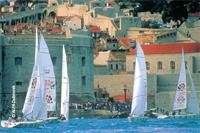
Extract from The Guardian www.guardian.co.uk
Garden Festival Zadar: 2 - 11 July
The 900-year-old Croatian walled city of Zadar is the place for dancing and summer sin this year. The Garden festival takes place between 'The Garden', a lounge club right on the walls of the city and on the beach of the Pinija Hotel, on a curving headland, partially hidden in trees, of Petrcane. The site itself is a mini paradise - a circular beachfront bar built into the sea with a large wooden terrace from which to watch the glorious sunsets. The heart of the action is Barbarellas, a seventies discotheque in the round that was built for the original advent of disco, but laid derelict for years until rescued by current owners Nick Colgan and Eddie O'Callaghan.
When Brittains club Electric Chair closed in January last year, there was much rumour and debate about what the founders, The Unabombers, would do next. Few could have anticipated that after 13 years of subterranean clubbing below the pavements of Manchester and an ethic that revolved around "a basement, a red light and a feeling", they would emerge into the sunshine and resurface on the beautiful Dalmatian coast of Croatia.
Breaking out of the basements has also allowed Electriks to showcase a hithero-hidden side of their music tastes. So, while they brought along longtime sparring partners like the house and disco Idjut Boys and the Balearic Aficionado, they also brought a bunch of psychedelic folk artists including Adem, King Creosote, Pictish Trail, Quiet Village and Liz Green. One of the highlights of the festival was a late night impromptu live acoustic set by John Stammers on the roof of the beach bar, which is about as far as you can get from the bass heavy sweaty basements The Unabombers grew up in.
The other highlight was the daily boat parties on the Argonaut - a couple of hundred salty old disco heads and electric souls setting sail every afternoon on the Adriatic for parties hosted by Lowlife, Homoelectric v Horsemeat Disco and Electric Chair v the Idjut Boys. Even Alfredo, the original Ibiza legend was forced to ponder if Adriatic is the new Balearic.
So, no basement, and the red light is now the sun dropping into the sea but, more importantly, the feeling remains intact.
Great music, beautiful people and unspoilt nature. Magical.
Showing posts with label to do in Croatia. Show all posts
Vis among the world´s undiscovered "dream islands"
Croatian Times
Yahoo Travel included the Croatian island of Vis among the world's 10 undiscovered "dream islands" in an article published yesterday (Wed).
The article mentions spectacular, deserted beaches, old citadels and the best vineyards in Dalmatia. It also praises the quaint, narrow streets and the island's selection of restaurants serving delicious seafood specialities.
As Vis has only three "humble hotels,' the visitors are advised to rent private accommodation and villas.
Vis was on the list together with Italian Ischia, Vietnamese Cat Ba, Fakarava island in French Polynesia, Anegada Island, part of the British Virgin Islands, Madeliene in Quebec, Lama in Kenya, Monhegan in Maine (USA) and Terre-de-Haut (Guadalupe).
The article mentions spectacular, deserted beaches, old citadels and the best vineyards in Dalmatia. It also praises the quaint, narrow streets and the island's selection of restaurants serving delicious seafood specialities.
As Vis has only three "humble hotels,' the visitors are advised to rent private accommodation and villas.
Vis was on the list together with Italian Ischia, Vietnamese Cat Ba, Fakarava island in French Polynesia, Anegada Island, part of the British Virgin Islands, Madeliene in Quebec, Lama in Kenya, Monhegan in Maine (USA) and Terre-de-Haut (Guadalupe).
Keira Knightley &Leonardo DiCaprio in Zagreb and Opatija
Author: Croatia Traveller
It’s been a long time in the making, but finally “The Beautiful and the Damned” is ready to begin filming. Keira Knightly will play wildwoman Zelda Fitzgerald in this pic based on F Scott Fitzgerald’s life. Rumours are that Leonardo di Caprio will play F Scott.
Croatians are excited that portions of the film will be shot in Zagreb and Opatija. Were the Fitzgeralds ever in Croatia? Dear readers, I don’t think so. So I wonder which European cities Zagreb and Opatija will represent? My bet is Paris and Nice. The Fitzgeralds did spend a fair amount of time boozing it up in Paris and also spent some time on the Cote d’Azur. Opatija is often called “Croatia’s Nice” for the dramatic coastal scenery. Architecturally, the towns aren’t dissimilar as Opatija’s architecture dates from the late 19th-century Austrians who took the waters there while Nice was a seaside favorite of 19th-century Brits who left a strong architectural imprint. Getting Zagreb to pass as Paris could be tougher. With clever camera angles and lighting, I suppose that certain streets in Zagreb’s medieval Upper Town could suggest Paris’ Left Bank.
Shooting is scheduled to begin this spring and should shed a well-deserved spotlight on two of Croatia’s most underrated destinations: Zagreb and Opatija.
It’s been a long time in the making, but finally “The Beautiful and the Damned” is ready to begin filming. Keira Knightly will play wildwoman Zelda Fitzgerald in this pic based on F Scott Fitzgerald’s life. Rumours are that Leonardo di Caprio will play F Scott.
Croatians are excited that portions of the film will be shot in Zagreb and Opatija. Were the Fitzgeralds ever in Croatia? Dear readers, I don’t think so. So I wonder which European cities Zagreb and Opatija will represent? My bet is Paris and Nice. The Fitzgeralds did spend a fair amount of time boozing it up in Paris and also spent some time on the Cote d’Azur. Opatija is often called “Croatia’s Nice” for the dramatic coastal scenery. Architecturally, the towns aren’t dissimilar as Opatija’s architecture dates from the late 19th-century Austrians who took the waters there while Nice was a seaside favorite of 19th-century Brits who left a strong architectural imprint. Getting Zagreb to pass as Paris could be tougher. With clever camera angles and lighting, I suppose that certain streets in Zagreb’s medieval Upper Town could suggest Paris’ Left Bank.
Shooting is scheduled to begin this spring and should shed a well-deserved spotlight on two of Croatia’s most underrated destinations: Zagreb and Opatija.
A reminder: Why Visit Croatia
With a 5,835 km long coastline, of which 4,058 km surrounds islands, cliffs and reefs, located in the south of European continent, Croatia is evidently the closest warm sea for many Europeans. Mild climate, remains of cities founds by ancient Romans and Greeks, and developed by the taste of later times and rulers (Venetians, Austro-Hungarian monarchy and the local population, remains of ships from all historical periods on the bottom of the Adriatic, natural beauties with which Croatia has been blessed and which have been preserved by the proactive environment protection policy, thermal spas and inland hunting attracts not only visitors who come only for a beach vacation, but also those who want to learn about the culture of other peoples or take part in different sports. No wonder organised tourism started in Croatia 160 years ago, and the tourist boureau (like the one in Zagreb), started in 1911 handling accommodation for foreign visitors.
With an experience of over 150 years in tourism, Croatia ranks among Europe's prime holiday destinations, boasting one of the most dramatic stretches of coastline that the continent has to offer, with almost 6000 km of shoreline and over 1000 islands, reefs and cliffs (67 inhabited islands). Over-exploitation of the coast has been kept in check, and there are still enough sparsely populated islands, quiet coves and stone-built fishing villages to make you feel you're visiting one of the Mediterranean's most unspoilt areas - in fact the Mediterranean as it used to be!
Much of the Croatia's individuality is due to its geographical position. Here the sober central European virtues of hard work and order blend with the spontaneity, vivacity and taste for good things in life that characterized the countries of Southern Europe - a cultural blend of the Mitteleuropa and the Mediterranean which gives Croatia its particular flavour.
Within an easy reach by air, sea, rail or road for all European visitors, Croatia offers a variety of accommodation capacities and free-time activities in a very preserved environment. Classic hotels and hotel settlements interchange with top-quality camping sites, farm houses, (apartments) in lighthouses, huts on isolated islands for Robinson Crusoe type holidays and numerous - Croatian speciality - private accommodation. Those are family owned lodging facilities, all supervised and ranked by the local authorities, with up to 20 beds in each, rented to tourists as rooms units, apartments or stand-alone houses. The hosts family caters for the tourists, which brings an additional touch to the holidays as they often include some extras, even taking the tourists to fish with them.
Though Croatia, among the tourist who have been there earlier, is often remembered as a very safe beach vacation destination with an interesting cultural heritage, protected environment, excellent facilities, cuisine and wines, in recent years great effort has been done to provide all sorts of sporting activities and special interest programmes for the tourists, stressing the activities characteristic for Croatia. Thus the Adriatic coast has become a synonym for yachting tourism, cruising with the wooden oldtimer motorsailer boats, scuba diving and sightseeing of ship remains from all historical periods, wind surfers paradise, with excellent facilities for all kind of recreation and soft adventure, ATP tournaments, bicycling tours in Istria and hopping from an island to another, rafting, team building activities, hunting and angling in the continental part of the country. Wellness and spa treatments, both recreational and medical, are popular throughout the year both at the 18 mineral spas and numerous hotels on the coast and inland. Numerous festivals, events, sports encounters, church festivities, night parties/entertainment for the young in spirit, together with a vast offer of day excursions and organized tours attract tourists of all ages and interests.
Many tourists know about Dubrovnik and its Summer Festival, Istria, Adriatic islands, the Diocletian Palace in Split, diving and sailing on the Adriatic, the Plitvice Lakes National Park, the world traveller Marco Polo, tennis player Goran Ivanisevic, skier Janica Kostelic, cravat, maraschino, wines, tartuf mushrooms, and even Vegeta, additive to food, but they do not know that all these are found in Croatia or originate from it. Even though Croatia is a new state, its people have participated in much of the history of the Old Continent
With an experience of over 150 years in tourism, Croatia ranks among Europe's prime holiday destinations, boasting one of the most dramatic stretches of coastline that the continent has to offer, with almost 6000 km of shoreline and over 1000 islands, reefs and cliffs (67 inhabited islands). Over-exploitation of the coast has been kept in check, and there are still enough sparsely populated islands, quiet coves and stone-built fishing villages to make you feel you're visiting one of the Mediterranean's most unspoilt areas - in fact the Mediterranean as it used to be!
Much of the Croatia's individuality is due to its geographical position. Here the sober central European virtues of hard work and order blend with the spontaneity, vivacity and taste for good things in life that characterized the countries of Southern Europe - a cultural blend of the Mitteleuropa and the Mediterranean which gives Croatia its particular flavour.
Within an easy reach by air, sea, rail or road for all European visitors, Croatia offers a variety of accommodation capacities and free-time activities in a very preserved environment. Classic hotels and hotel settlements interchange with top-quality camping sites, farm houses, (apartments) in lighthouses, huts on isolated islands for Robinson Crusoe type holidays and numerous - Croatian speciality - private accommodation. Those are family owned lodging facilities, all supervised and ranked by the local authorities, with up to 20 beds in each, rented to tourists as rooms units, apartments or stand-alone houses. The hosts family caters for the tourists, which brings an additional touch to the holidays as they often include some extras, even taking the tourists to fish with them.
Though Croatia, among the tourist who have been there earlier, is often remembered as a very safe beach vacation destination with an interesting cultural heritage, protected environment, excellent facilities, cuisine and wines, in recent years great effort has been done to provide all sorts of sporting activities and special interest programmes for the tourists, stressing the activities characteristic for Croatia. Thus the Adriatic coast has become a synonym for yachting tourism, cruising with the wooden oldtimer motorsailer boats, scuba diving and sightseeing of ship remains from all historical periods, wind surfers paradise, with excellent facilities for all kind of recreation and soft adventure, ATP tournaments, bicycling tours in Istria and hopping from an island to another, rafting, team building activities, hunting and angling in the continental part of the country. Wellness and spa treatments, both recreational and medical, are popular throughout the year both at the 18 mineral spas and numerous hotels on the coast and inland. Numerous festivals, events, sports encounters, church festivities, night parties/entertainment for the young in spirit, together with a vast offer of day excursions and organized tours attract tourists of all ages and interests.
Many tourists know about Dubrovnik and its Summer Festival, Istria, Adriatic islands, the Diocletian Palace in Split, diving and sailing on the Adriatic, the Plitvice Lakes National Park, the world traveller Marco Polo, tennis player Goran Ivanisevic, skier Janica Kostelic, cravat, maraschino, wines, tartuf mushrooms, and even Vegeta, additive to food, but they do not know that all these are found in Croatia or originate from it. Even though Croatia is a new state, its people have participated in much of the history of the Old Continent
Geographical position
Croatia extends from the farthest eastern edges of the Alps in the north-west to the Pannonian lowlands and the banks of the Danube in the east. Its central region is covered by the Dinara mountain range and its southern part reaches the coast on the Adriatic Sea.
Climate
Northern Croatia has a continental climate. The central part of the country is predominantly mountain or alpine and the coast is Mediterranean. The Croatian Adriatic has an average of 2,600 hours of sunshine per year and an average sea temperature of 25 to 27 °C. It is indeed one of the sunniest and warmest coasts in Europe. The ideal summer wardrobe consists of light summer clothes and something warmer for the evenings. It rains more often in spring and autumn, and winters can be quite harsh in central and northern areas, with considerable amounts of snow. For exact data for your destination please consult your travel agency.
See also: Croatian Meteorological and Hydrological Service
Independence
Though the first independent Croatian kingdom was recognised in 925, the Republic of Croatia is a young democratic European state. The Croatian Parliament declared independence in 1991 (having previously broken off all state and legal ties with the former Yugoslavia). On 15 January 1992. the member states of the European Union recognized Croatia as an independent state, and the country was admitted to the UN on 22 May 1992.
Area
56,542 square kilometres of land and 31,067 square kilometres of sea.
Length of the coast
5,835 kilometres, with 4,058 kilometres of the island coastline, reefs and cliffs.
Islands, reefs and cliffs
1,185 (718 islands, 389 cliffs and 78 reefs). Out of 67 inhabited islands with 130.000 inhabitants, the biggest are Krk and Cres.
Population
4,381,352 (according to the 2001 census). Most of the population are Croats. The ethnical minorities include Serbs, Bosnians, Italians, Hungarians, Albanians, Slovenians , Czechs, Romanies and others.
Capital
Zagreb - 779,145 inhabitants (according to 2001 census) - the cultural, academic, administrative, economic and transportation center of the country.
Official language and alphabet
The Croatian language and Latin alphabet.
Religion
The majority are Roman Catholics. There are some of the Orthodox, Muslim and other Christian denomination followers.
State system
Multiparty parliamentary republic.
Time zone
GMT + one hour from Saturday before last Sunday in October to last Saturday in March,
GMT + two hours from last Saturday in March to Saturday before last Sunday in October.
Electricity voltage
220 V; 50 Hz.
Water
Tap water is safe for drinking in all parts of Croatia.
Currency
Kuna (1 Kuna = 100 Lipa). There are 1, 2, 5, 10, 20, 50 Lipa coins, 1, 2, 5 and 25 Kuna coins and 5, 10, 20, 50, 100, 200, 500 and 1,000 Kuna banknotes.
Working Hours & Holidays
Travel agencies
Along the coast: in high season 8 am to 8 pm or longer, Saturdays and Sundays 8 a.m. to 2 p.m., but most stay open till 8 p.m.; off season 8 a.m. to 1 or 2 p.m., Saturdays 8 a.m. to 1 p.m., Sundays closed. In Zagreb, all year round 8 a.m. to 7 p.m. (in other continental towns mostly 8 a.m. to 4 p.m.) Monday to Friday, Saturdays 8 a.m. to midday, Sundays closed.
In Zagreb, tourist information offices and exchange offices are also open Saturdays and Sundays. Public services and firms usually work from 8 am to 4 pm from Monday to Friday.
Working hours
Department stores and groceries are open continuously from 7.30 or 8 am to 8 pm, while some shops and groceries close from noon to 4 or 5 pm. On Saturdays most shops are open from 7.30 am to 2 pm. In major cities megastores stay open late on Saturdays and work until 1 or 6 p.m. on Sundays. Some work 24 hours a day. In tourist destinations, in high season, most shops stay open longer, including Saturdays and Sundays. Public services and companies usually work from 8.30 a.m. to 4.30 p.m. from Monday to Friday.
Travel agencies along the coast in high season work 8 am to 8 pm or longer, Saturdays and Sundays 8am to 2pm, but most stay open until 8 pm; off-season 8 am to 1 or 2 pm, Saturdays 8 am to 1 pm, Sundays closed. In Zagreb, all year round 8 am to 7 pm (in other continental towns mostly 8 am to 4 pm) Monday to Friday, Saturdays 8 am to noon or 1 p.m., Sundays closed. In Zagreb, tourist information offices and exchange offices are also open Saturdays and Sundays.
Public services and business offices work Monday to Friday from 8. a.m. to 4 p.m. but on the coast working hours vary with the seasons.
Public holidays
Non-working days in Croatia are:
2002 | 2003 | 2004 | ||
New Year's Day | 1 Jan | 1 Jan | 1 Jan | |
Epiphany | Catholic | 6 Jan | 6 Jan | 6 Jan |
Easter Monday | Catholic | 1 Apr | 21 Apr | 12 Apr |
International Labour Day | 1 May | 1 May | 1 May | |
Corpus Christi | Catholic | 30 May | 19 Jun | 10 Jun |
Anti-Fascist Resistance Day | 22 Jun | 22 Jun | 22 Jun | |
Statehood Day | 25 Jun | 25 Jun | 25 Jun | |
Victory Day and National Thanksgiving Day | 5 Aug | 5 Aug | 5 Aug | |
Assumption | Catholic | 15 Aug | 15 Aug | 15 Aug |
Independence Day | 8 Oct | 8 Oct | 8 Oct | |
All Saints' Day | Catholic | 1 Nov | 1 Nov | 1 Nov |
Christmas Holidays | Catholic | 25/26 Dec | 25/26 Dec | 25/26 Dec |
The first term of all primary and secondary schools in the 2002/2003 school year lasts from 9 September to 20 December 2002, the winter vacation is from 21 December to 12 January 2003, the second term starts 13 January and ends 18 June. There is Easter vacation from 17 to 27 April 2003. Schools normally operate from Monday to Friday.
When national or religious holidays are on a Tuesday or Thursday, there is a long weekend and very often no school on the Monday or Friday between the holiday and the weekend. These are the most popular times for travelling to the coast or abroad.
Tax-Free Shopping
Tourists whose purchases exceed 500 Kuna may claim a PDV (VAT) tax return for all goods except petroleum products when leaving the country. At point of purchase the sales person will provide on request a PDV-P form, which should be filled out and stamped on the spot. On leaving Croatia the receipt must be verified by the Croatian Customs service. A PDV refund in Kunas can be obtained within six months, either at the same shop where the goods were purchased (in which case the tax is refunded immediately), or by posting the verified receipt back to the shop, together with the account number into which the refund should be paid. In this case the refund is dealt with within 15 days of receipt of the claim. An easier way is to purchase goods in shops with a "CROATIA TAX-FREE SHOPPING" label. Using an international coupon, refund is possible in all countries-members of the TAX-FREE international chain. In this case the service charge is deducted from the tax refund amount.
Safety & Medical Care
Personal Safety
It is quite safe to travel all over Croatia and mugging and thefts are not a problem. You can safely walk in any town at night.
Medical Care
There are hospitals and clinics in all major towns, and health centres, as well as pharmacies, in all smaller places. For patients whose lives are in danger, there is emergency transport by air (helicopter) or sea (speedboat). On weekends and public holidays in high season, when highest density of traffic is expected, police helicopters with medical teams supervise the major roads.
Foreign tourists do not have to pay for medical services if there is a signed health insurance convention between Croatia and the country of origin. If the Convention stipulates that traveller should have a form covering medical insurance, the form must be provided when requesting free medical service. Tourists from a country that does not have a signed convention with Croatia pay their health care costs directly in accordance with the listed prices.
Pursuant legal provisions, tour operators in all countries recommend buying a travel insurance package, specially a health insurance policy, which will enable you to use quality health protection abroad, regardless of the fact whether the health service in your country has signed a bilateral convention on free medical care with the country where you are travelling. It would be advisable to buy the appropriate insurance. Please check whether this insurance is already included in your travel package. Upon arrival to Croatia, visitors can also buy short-term health insurance policies issued by Croatian insurance companies.
Members of ADAC and OAMTC can also contact their local representative at 01 34 40 666 in high season Monday to Friday from 8 a.m. to 8 p.m., Saturday and Sunday 9 a.m. to 5 p.m., in other months Monday to Friday from 8 a.m. to 6 p.m. and Saturday and Sunday 9 a.m. to 5 p.m.
Personal Safety
It is quite safe to travel all over Croatia and mugging and thefts are not a problem. You can safely walk in any town at night.
Medical Care
There are hospitals and clinics in all major towns, and health centres, as well as pharmacies, in all smaller places. For patients whose lives are in danger, there is emergency transport by air (helicopter) or sea (speedboat). On weekends and public holidays in high season, when highest density of traffic is expected, police helicopters with medical teams supervise the major roads.
Foreign tourists do not have to pay for medical services if there is a signed health insurance convention between Croatia and the country of origin. If the Convention stipulates that traveller should have a form covering medical insurance, the form must be provided when requesting free medical service. Tourists from a country that does not have a signed convention with Croatia pay their health care costs directly in accordance with the listed prices.
Pursuant legal provisions, tour operators in all countries recommend buying a travel insurance package, specially a health insurance policy, which will enable you to use quality health protection abroad, regardless of the fact whether the health service in your country has signed a bilateral convention on free medical care with the country where you are travelling. It would be advisable to buy the appropriate insurance. Please check whether this insurance is already included in your travel package. Upon arrival to Croatia, visitors can also buy short-term health insurance policies issued by Croatian insurance companies.
Members of ADAC and OAMTC can also contact their local representative at 01 34 40 666 in high season Monday to Friday from 8 a.m. to 8 p.m., Saturday and Sunday 9 a.m. to 5 p.m., in other months Monday to Friday from 8 a.m. to 6 p.m. and Saturday and Sunday 9 a.m. to 5 p.m.
International telephone code for Croatia: 385
Information about local and intercity phone numbers: 988
Information about international phone numbers: 902
General information: 981
Police: 92
Fire Brigade: 93
Ambulance: 94
Notification and alarm centre: 985
Weather forecast and road conditions: 060 520 520
Coast guard: 9155
Croatian Automobile Club (HAK) - www.hak.hr - phones: +385 1 46 40 800 and 45 54 433
Air traffic: Croatia Airlines information: +385 1 48 19 633 - reservation +385 1 48 72 727 - for callers from Croatia: Croatia Airlines information - toll free - 0800 77 77 777 and reservations 062 77 77 77
Dubrovnik in BA’s top ten travel destinations for 2010
Dubrovnik has been selected by British Airways travel experts as one of the top ten travel destinations for 2010.
Known as the ‘Pearl of the Adriatic’, Croatia offers privacy and tranquillity making it a popular hideout for the jet set, including recent visitors Jay-Z and Beyonce, according to the report.
Mirjana Dostal, British Airways commercial manager Croatia, said: "Dubrovnik holds many attractions and delightful boutiques, with each corner of the city offering a unique experience. However its cluster of private islands have made this a new favourite destination for Hollywood A-Listers to get-away."
Apart from Dubrovnik, BA's top 10 destinations for 2010 include Cape Town (South Africa), Istanbul (Turkey), Las Vegas (USA), Vancouver (Canada), Punta Cana (Dominican Republic), New York (USA), Stockholm (Sweden), The Maldives and Delhi (India).
Known as the ‘Pearl of the Adriatic’, Croatia offers privacy and tranquillity making it a popular hideout for the jet set, including recent visitors Jay-Z and Beyonce, according to the report.
Mirjana Dostal, British Airways commercial manager Croatia, said: "Dubrovnik holds many attractions and delightful boutiques, with each corner of the city offering a unique experience. However its cluster of private islands have made this a new favourite destination for Hollywood A-Listers to get-away."
Apart from Dubrovnik, BA's top 10 destinations for 2010 include Cape Town (South Africa), Istanbul (Turkey), Las Vegas (USA), Vancouver (Canada), Punta Cana (Dominican Republic), New York (USA), Stockholm (Sweden), The Maldives and Delhi (India).
Croatia jet set destination of choice
Croatian Times
Croatia has become the jet set celebrity holiday destination of choice, according to American station CNN.
CNN has reported Dubai has been dropped by celebs because of its financial problems and the top "now" destination is instead Croatia.
The station said in a report on the country: "On the Adriatic arm of the Mediterranean – Croatia rivals other European seaside areas with beaches, sailing, and superb cuisine that's attracted superstars like Steven Spielberg, Andre Agassi, Gwyneth Paltrow, Robert De Niro, Clint Eastwood, and Sharon Stone."
Croatia has become the jet set celebrity holiday destination of choice, according to American station CNN.
CNN has reported Dubai has been dropped by celebs because of its financial problems and the top "now" destination is instead Croatia.
The station said in a report on the country: "On the Adriatic arm of the Mediterranean – Croatia rivals other European seaside areas with beaches, sailing, and superb cuisine that's attracted superstars like Steven Spielberg, Andre Agassi, Gwyneth Paltrow, Robert De Niro, Clint Eastwood, and Sharon Stone."
A look at Hvar by New York Times

In their new resort report series, the New York times looks at Hvar, Croatia and get the lowdown on the best places to eat and stay
When I first arrived in Hvar Town, I almost wondered if the ferry from Split had taken a wrong turn and I’d ended up in EuroDisney. The small harbourfront town is almost too picturesque to be real; shiny cobbles, a central square dominated by elegant Venetian architecture lined with white-canopied cafes and a village of terracotta-roofed houses and tiny streets clustered up the hill behind.
It’s long been the hippest resort in Croatia – Roman Abramovich likes to cruise into town on his mega-yacht, and local hero Goran Ivanisevic is a regular at the Carpe Diem bar - but moves are afoot to create a glitzy five-star playground to rival the likes of St Tropez.
Most of this is down to one hotel chain, Suncani Hvar who have recently been taken over and are now investing massively in the nine hotels they own on the island. Gone (or going) are the simple two and three-star accommodations, to be replaced by sleek design hotels with cocktail bars and wi-fi internet access and Ibiza-esque soundtracks on a loop.
Two have opened this summer – the Riva and the Adriana – both members of Small Luxury Hotels of the World and already changing the profile of what had been a fairly egaliatarian tourist mix. Walking along the harbourfront I heard American backpackers, German families, clusters of mini-skirted Italians. But mostly I heard the sound of money; groups of bronzed young things knocking back Camparis and discussing their day’s sailing at the Café Plajca on the harbourfront.
Hvar is an evening town; as with most Croatia resorts, it does suffer from a lack of decent beaches. If you’re feeling lazy, you can stroll down, past the Riva and Carpe Diem and on round the harbour to a small shingle beach close to the Dalmacija hotel. But the best plan is to join the crowds of Croatian holidaymakers who hop on the regular boat taxis to the Pakleni islands – about 30 glorious minutes of drifting across a sea with the clarity of cut glass.
As the sun begins to set on Hvar Town, the real action begins. For many, supper is just a pitstop between early even cocktails and late-night drinks, but the vibe is laid-back and there’s little in the way of clubbing. The late night action centres around Carpe Diem which combines an elegant terrace with low, rattan sofas with a cosy lounge bar all housed in a beautiful Venetian mansion. It’s definitely worth a visit, but I preferred Zimmer Frei, to the right of the main square, smaller, cosier and offering the chance to lounge on white sofa cushions in the tiny street and sip excellent Caiprinhas away from the hordes.
But perhaps one of the simplest pleasures on Hvar is taking part in the evening passagiata – with that must-have accessory, an ice-cream. The Slasticarna (the Croatian equivalent of a gelateria) served me up a fantastic combination of pistachio and chocolate, which I ate strolling between lascivious Italian couples and groups of Croatian holidaymakers. Beautiful place, beautiful people, beautiful ice-cream. What more can you want from a holiday?
The Riva is the flagship of the Suncani Hvar chain, and it is sleekly elegant. Rooms are the usual melange of creams and cool browns, glassfronted bathrooms, rainshowers and wi-fi access. The real draw is the elegant harbourfront terrace, all cubist sofas and apron-clad waiters bringing expertly mixed Manhattans against an Ibiza-at-sunset soundtrack. Doubles from £130, but you’ll be lucky to get one of the standard rooms with a harbour view.
The Adriana
When I first arrived in Hvar Town, I almost wondered if the ferry from Split had taken a wrong turn and I’d ended up in EuroDisney. The small harbourfront town is almost too picturesque to be real; shiny cobbles, a central square dominated by elegant Venetian architecture lined with white-canopied cafes and a village of terracotta-roofed houses and tiny streets clustered up the hill behind.
It’s long been the hippest resort in Croatia – Roman Abramovich likes to cruise into town on his mega-yacht, and local hero Goran Ivanisevic is a regular at the Carpe Diem bar - but moves are afoot to create a glitzy five-star playground to rival the likes of St Tropez.
Most of this is down to one hotel chain, Suncani Hvar who have recently been taken over and are now investing massively in the nine hotels they own on the island. Gone (or going) are the simple two and three-star accommodations, to be replaced by sleek design hotels with cocktail bars and wi-fi internet access and Ibiza-esque soundtracks on a loop.
Two have opened this summer – the Riva and the Adriana – both members of Small Luxury Hotels of the World and already changing the profile of what had been a fairly egaliatarian tourist mix. Walking along the harbourfront I heard American backpackers, German families, clusters of mini-skirted Italians. But mostly I heard the sound of money; groups of bronzed young things knocking back Camparis and discussing their day’s sailing at the Café Plajca on the harbourfront.
Hvar is an evening town; as with most Croatia resorts, it does suffer from a lack of decent beaches. If you’re feeling lazy, you can stroll down, past the Riva and Carpe Diem and on round the harbour to a small shingle beach close to the Dalmacija hotel. But the best plan is to join the crowds of Croatian holidaymakers who hop on the regular boat taxis to the Pakleni islands – about 30 glorious minutes of drifting across a sea with the clarity of cut glass.
As the sun begins to set on Hvar Town, the real action begins. For many, supper is just a pitstop between early even cocktails and late-night drinks, but the vibe is laid-back and there’s little in the way of clubbing. The late night action centres around Carpe Diem which combines an elegant terrace with low, rattan sofas with a cosy lounge bar all housed in a beautiful Venetian mansion. It’s definitely worth a visit, but I preferred Zimmer Frei, to the right of the main square, smaller, cosier and offering the chance to lounge on white sofa cushions in the tiny street and sip excellent Caiprinhas away from the hordes.
But perhaps one of the simplest pleasures on Hvar is taking part in the evening passagiata – with that must-have accessory, an ice-cream. The Slasticarna (the Croatian equivalent of a gelateria) served me up a fantastic combination of pistachio and chocolate, which I ate strolling between lascivious Italian couples and groups of Croatian holidaymakers. Beautiful place, beautiful people, beautiful ice-cream. What more can you want from a holiday?
The Riva is the flagship of the Suncani Hvar chain, and it is sleekly elegant. Rooms are the usual melange of creams and cool browns, glassfronted bathrooms, rainshowers and wi-fi access. The real draw is the elegant harbourfront terrace, all cubist sofas and apron-clad waiters bringing expertly mixed Manhattans against an Ibiza-at-sunset soundtrack. Doubles from £130, but you’ll be lucky to get one of the standard rooms with a harbour view.
The Adriana
The Adriana is the latest of the revamped hotels to open, located on the opposite side of the harbour to the Riva. Standard rooms are small, but there’s a gorgeous rooftop terrace with suitably squidgy day-beds, and the restaurant terrace at the front of the hotel does a tip-top shrimp risotto, with a good side order of people-watching. The Sensori spa offers all manner of treatments (there are outdoor massage cabanas) and something called a Mindfulness Walk. There’s a rooftop seawater pool that provokes just one question – why on earth did they build it indoors? Doubles from £185 per night.
The Podstine
There are a few options besides the Suncani Hvar sleekness. The Podstine is a fifteen-minute walk from the main square, right next to the pebble beach – being a short way out of the action can be a good thing if you’re after a little peace. Doubles from £95, B&B.,
If you can’t drag yourself away from the gorgeous pine-fringed beach on Palmizana and feel like missing the boat back, there is a fantastic place to stay – the Pansion Meneghello tel. 21 717 270, has bungalows and villas, set among the trees, from around £30 pp per night.
WHERE TO EAT
Restaurants: Eat anywhere on the main square or harbour and you’ll pay top dollar for a standard – at best – choice of fish, grilled meats and salads – and at worse, overpriced lazy dishes. Yet head just one or two streets behind and there are plenty of excellent options. Petra Hektorovica, an alleyway just behind the main square is home to a couple of good options; Macondo (21 742 850) has long been popular and is pretty top-end (and you’ll have to reserve to get a table in high season) but if you like a starched tablecloths (and I do) and a slab of perfectly grilled swordfish with a zingily fresh salad, then it will hit the spot. Dinner for two from £40.
Staying on Hekotorovica, avoid the overly-praised Luna, and head instead for Zlatna Skoljka (98 168 8797), one of Croatia’s only ‘slow-food’ restaurants – which basically means good traditional food that appears at your table in its own time. All the more time to knock back a glass or two of Malvasia (good Croatian white wine) before tucking into goats cheese in olive oil and a succulent lamb stew. Seriously yummy but, being Hvar, not cheap – approx £50 for two. There are simpler options. I stumbled upon the Gostiona Kod Matkovica on a small square (Anton Markovic) just behind the Riva. It's rustic, authentic and wonderfully cheap; a vast platter of mussels, glass of local wine and cost about £8.
More info: http://www.tzzadar.hr/
Beach: The nearest thing to a beach is on the outlying Pakleni Otoci, a pine-forested archipelago buffering the town's harbour, £4 return by water taxi. The best beach is on Parmizana, with sandy stretches flanked by restaurants, its small bay dotted with yachts mooring for lunch. Idyllic, and reasonable: a four-course meal including buttery pasta with lobster and local wine cost £12 a head.
June 21 - September 30: annual summer festival, one of the Croatian coast's oldest summer events, with concerts, theatre and folk performances from Croatian and international artists. More information: http://www.travel-2-croatia.com/
THE EXPERTS' VIEW
Michael at URBAN JUNKIES writes: Sunsets - they say that Hvar has the prettiest sunsets. Once you see the intense blue sky give way to hues of red, yellow and purple in the evening, it's hard to disagree. Lovers and honeymooners have long flocked to the island to watch the sun go down.
For our own courtship, we'd pass on the views from Cafe del Mar-esque Carpe Diem, despite its excellent cocktails and cool scene. We'd even forego the the intimate wooden shacks that make up the atmospheric Hula-Hula bar. Instead, we'd grab a container of bevanda (red wine with water), walk south along the beach to the 15th Century Franciscan Monastery and soak up the last rays of daylight in front of the cloisters.
Eating out: Make the trek to the Mekicevica beach (10 minutes by boat or 30 minutes walking on the road towards the village of Milna), a small white pebble paradise better known as Robinson Crusoe, the name of the small improvised restaurant on site. With no electricity, you're served what's available on the day, usually a feast of fresh fish and a variety of appetisers. Pure bliss.
Christina at iTRAVELiSHOP suggests:Beach - to top up your tan in style, head to Hvar’s luxury beach club, the Bonj Les Bains. The beach club is carved out from a restored 1930’s stone building and is nestled under a pine grove. Book a private cabana here for total privacy, and massages are also available.
Hotels: Hvar is steadily becoming one of the hottest European party destinations - and for good reason, with its mix of sun, beaches and clubs. But choose your hotel carefully as most are functional rather than stylish. The big exception - and the best place to stay - is the Riva Hotel, a member of Small Luxury Hotels of the World. This boutique is on the waterfront and the rooms are playful and sexy; above your bed you’ll find B&W photos of classic Hollywood icons, like James Dean. Sharon Stone, Bill and Melinda Gates, and Steven Spielberg have all stayed here. Rates start at £117.
Restaurants: You’ll have to hunt to find Macondo, located on a tiny alley just off the main square, but its well worth it to sample the fresh seafood. The restaurant is named after the town in "One Hundred Years of Solitude,” and the décor is understated, with stone walls, a few pieces of modern art and simple white tablecloths. Order the catch of the day or the gregada, a thick seafood soup. (2 blocks north of trg Sv Stjepna, Hvar Town. 021/742-850.
If you’re looking for something more casual, try Menego. Some of the best dishes are marinated anchovies, octopus and chickpea salad, figs stuffed with almonds, and Dalmation ham, which is smooth and buttery. The chic set heads to Luna (1 Petar Hektorovića, Hvar town, Phone 385 21 741 400). The food is classics with a twist, like shrimp gazpacho and smoked salmon.
Nightlife: Some of the city’s best clubs feel like they have been imported directly from Ibiza. Carpe Diem is the biggest and best known, and has white slip-covered day beds and internationally known DJs. Expect a Euro-glam crowd, so pack your white jeans and D&G shades. If you’d rather hang out in a more casual bar, try Kiva off the main square which is favoured by the locals (and where bartenders are known to throw tequila at you). If it’s after hours (say 3am) and you want to keep on partying, try Veneranda, a nightclub that’s housed in a former monastery. The club is located in the midst of pine groves on a hillside overlooking the harbour.
Michael at iESCAPE writes: Hotels - our favourite is Hotel Podstine, a romantic seafront hotel and restaurant in a secluded bay, with tables right next to the water, and a swimming pier with steps. It's 20 minutes' walk (or a short taxi-boat ride) along the coast from Hvar.
Beaches: We particularly like “Robinson beach” which is halfway to Milna along the coastal path (about an hour's walk). It has a café and sandy seabed, though the beach itself is pebbly. On the way to Robinson (40 mins' walk) you pass Pokojnyi Dol beach, popular and good for children. If you continue walking to Milna (or take a taxiboat), about 750 metres before Milna, a path leads to a spectacular beach below a cliff, one of the most secluded on the island. On Palmizana, one of the offshore islands served by taxiboat, there is a small sandy beach (the only sandy one in the area, hence it can get crowded) and a wonderful fish restaurant, Zori, which serves the best scampi buzara. They also have cabins for staying overnight.
Restaurants: Our favourite is Leporini, on a lovely Venetian street in the Groda. They serve fantastic fish, grilled or gregada, and seafood dishes, including octopus salad, black risotto made with calamari in its ink and wine, and seafood spaghetti. If you go out of season you get trad peasant food e.g. bean dishes or roast lamb, which is best ordered in advance. Another speciality is octopus "peka" (or "hobotnitsa") which is cooked "under the bell" and needs 24 hours advance notice. The best place for this is Panorama restaurant, reached by taxi. Make sure you get there before sunset to enjoy the spectacular views from the terrace. If your hotel cannot order the peka for you, go to the town tourist office and ask them to ring on your behalf.
The best out-of-the-way place is the restaurant in the almost abandoned village of Malo Grablje, run by the Tudors. It’s only been open a couple of years; everything is home made and the husband and wife team running it are extremely hospitable. You can get wild boar in season. Electricity is from a generator. It's closed in winter, and taxi drivers are not very keen on driving there on account of the gravel road from Milna; it is essential to pre-arrange pick-up after dinner.
The Podstine
There are a few options besides the Suncani Hvar sleekness. The Podstine is a fifteen-minute walk from the main square, right next to the pebble beach – being a short way out of the action can be a good thing if you’re after a little peace. Doubles from £95, B&B.,
If you can’t drag yourself away from the gorgeous pine-fringed beach on Palmizana and feel like missing the boat back, there is a fantastic place to stay – the Pansion Meneghello tel. 21 717 270, has bungalows and villas, set among the trees, from around £30 pp per night.
WHERE TO EAT
Restaurants: Eat anywhere on the main square or harbour and you’ll pay top dollar for a standard – at best – choice of fish, grilled meats and salads – and at worse, overpriced lazy dishes. Yet head just one or two streets behind and there are plenty of excellent options. Petra Hektorovica, an alleyway just behind the main square is home to a couple of good options; Macondo (21 742 850) has long been popular and is pretty top-end (and you’ll have to reserve to get a table in high season) but if you like a starched tablecloths (and I do) and a slab of perfectly grilled swordfish with a zingily fresh salad, then it will hit the spot. Dinner for two from £40.
Staying on Hekotorovica, avoid the overly-praised Luna, and head instead for Zlatna Skoljka (98 168 8797), one of Croatia’s only ‘slow-food’ restaurants – which basically means good traditional food that appears at your table in its own time. All the more time to knock back a glass or two of Malvasia (good Croatian white wine) before tucking into goats cheese in olive oil and a succulent lamb stew. Seriously yummy but, being Hvar, not cheap – approx £50 for two. There are simpler options. I stumbled upon the Gostiona Kod Matkovica on a small square (Anton Markovic) just behind the Riva. It's rustic, authentic and wonderfully cheap; a vast platter of mussels, glass of local wine and cost about £8.
More info: http://www.tzzadar.hr/
Beach: The nearest thing to a beach is on the outlying Pakleni Otoci, a pine-forested archipelago buffering the town's harbour, £4 return by water taxi. The best beach is on Parmizana, with sandy stretches flanked by restaurants, its small bay dotted with yachts mooring for lunch. Idyllic, and reasonable: a four-course meal including buttery pasta with lobster and local wine cost £12 a head.
June 21 - September 30: annual summer festival, one of the Croatian coast's oldest summer events, with concerts, theatre and folk performances from Croatian and international artists. More information: http://www.travel-2-croatia.com/
THE EXPERTS' VIEW
Michael at URBAN JUNKIES writes: Sunsets - they say that Hvar has the prettiest sunsets. Once you see the intense blue sky give way to hues of red, yellow and purple in the evening, it's hard to disagree. Lovers and honeymooners have long flocked to the island to watch the sun go down.
For our own courtship, we'd pass on the views from Cafe del Mar-esque Carpe Diem, despite its excellent cocktails and cool scene. We'd even forego the the intimate wooden shacks that make up the atmospheric Hula-Hula bar. Instead, we'd grab a container of bevanda (red wine with water), walk south along the beach to the 15th Century Franciscan Monastery and soak up the last rays of daylight in front of the cloisters.
Eating out: Make the trek to the Mekicevica beach (10 minutes by boat or 30 minutes walking on the road towards the village of Milna), a small white pebble paradise better known as Robinson Crusoe, the name of the small improvised restaurant on site. With no electricity, you're served what's available on the day, usually a feast of fresh fish and a variety of appetisers. Pure bliss.
Christina at iTRAVELiSHOP suggests:Beach - to top up your tan in style, head to Hvar’s luxury beach club, the Bonj Les Bains. The beach club is carved out from a restored 1930’s stone building and is nestled under a pine grove. Book a private cabana here for total privacy, and massages are also available.
Hotels: Hvar is steadily becoming one of the hottest European party destinations - and for good reason, with its mix of sun, beaches and clubs. But choose your hotel carefully as most are functional rather than stylish. The big exception - and the best place to stay - is the Riva Hotel, a member of Small Luxury Hotels of the World. This boutique is on the waterfront and the rooms are playful and sexy; above your bed you’ll find B&W photos of classic Hollywood icons, like James Dean. Sharon Stone, Bill and Melinda Gates, and Steven Spielberg have all stayed here. Rates start at £117.
Restaurants: You’ll have to hunt to find Macondo, located on a tiny alley just off the main square, but its well worth it to sample the fresh seafood. The restaurant is named after the town in "One Hundred Years of Solitude,” and the décor is understated, with stone walls, a few pieces of modern art and simple white tablecloths. Order the catch of the day or the gregada, a thick seafood soup. (2 blocks north of trg Sv Stjepna, Hvar Town. 021/742-850.
If you’re looking for something more casual, try Menego. Some of the best dishes are marinated anchovies, octopus and chickpea salad, figs stuffed with almonds, and Dalmation ham, which is smooth and buttery. The chic set heads to Luna (1 Petar Hektorovića, Hvar town, Phone 385 21 741 400). The food is classics with a twist, like shrimp gazpacho and smoked salmon.
Nightlife: Some of the city’s best clubs feel like they have been imported directly from Ibiza. Carpe Diem is the biggest and best known, and has white slip-covered day beds and internationally known DJs. Expect a Euro-glam crowd, so pack your white jeans and D&G shades. If you’d rather hang out in a more casual bar, try Kiva off the main square which is favoured by the locals (and where bartenders are known to throw tequila at you). If it’s after hours (say 3am) and you want to keep on partying, try Veneranda, a nightclub that’s housed in a former monastery. The club is located in the midst of pine groves on a hillside overlooking the harbour.
Michael at iESCAPE writes: Hotels - our favourite is Hotel Podstine, a romantic seafront hotel and restaurant in a secluded bay, with tables right next to the water, and a swimming pier with steps. It's 20 minutes' walk (or a short taxi-boat ride) along the coast from Hvar.
Beaches: We particularly like “Robinson beach” which is halfway to Milna along the coastal path (about an hour's walk). It has a café and sandy seabed, though the beach itself is pebbly. On the way to Robinson (40 mins' walk) you pass Pokojnyi Dol beach, popular and good for children. If you continue walking to Milna (or take a taxiboat), about 750 metres before Milna, a path leads to a spectacular beach below a cliff, one of the most secluded on the island. On Palmizana, one of the offshore islands served by taxiboat, there is a small sandy beach (the only sandy one in the area, hence it can get crowded) and a wonderful fish restaurant, Zori, which serves the best scampi buzara. They also have cabins for staying overnight.
Restaurants: Our favourite is Leporini, on a lovely Venetian street in the Groda. They serve fantastic fish, grilled or gregada, and seafood dishes, including octopus salad, black risotto made with calamari in its ink and wine, and seafood spaghetti. If you go out of season you get trad peasant food e.g. bean dishes or roast lamb, which is best ordered in advance. Another speciality is octopus "peka" (or "hobotnitsa") which is cooked "under the bell" and needs 24 hours advance notice. The best place for this is Panorama restaurant, reached by taxi. Make sure you get there before sunset to enjoy the spectacular views from the terrace. If your hotel cannot order the peka for you, go to the town tourist office and ask them to ring on your behalf.
The best out-of-the-way place is the restaurant in the almost abandoned village of Malo Grablje, run by the Tudors. It’s only been open a couple of years; everything is home made and the husband and wife team running it are extremely hospitable. You can get wild boar in season. Electricity is from a generator. It's closed in winter, and taxi drivers are not very keen on driving there on account of the gravel road from Milna; it is essential to pre-arrange pick-up after dinner.
How Hvar got hip
Stylish hotels have never been Croatia's strong point but one island has
given its accommodation a radical makeover. Annabelle Thorpe reports
The Observer, Sunday May 18 2008 Annabelle Thorpe
given its accommodation a radical makeover. Annabelle Thorpe reports
The Observer, Sunday May 18 2008 Annabelle Thorpe
Strolling into Hvar Town in the late afternoon sunshine, for a moment I feel as though I have arrived in the middle of a tourist board photo shoot. It looks too brochure-perfect; the polished cobbles of the piazza gleam in the rich sunlight, chisel-jawed yachting types and blondes in skimpy frocks curl up on rattan sofas beneath pristine white parasols, sipping cold beers and caipirinhas that come with neat heaps of roasted almonds and a Café del Mar soundtrack. A cluster of terracotta-roofed houses clambers up the hillside behind the harbour, opposite a glittering sea stretching out to some hazily blue islands.
Blessed with a picturesque natural harbour, elegant 17th-century piazza and a striking Renaissance cathedral and arsenal where ships once docked for repairs (now a modern art gallery), the island of Hvar has always been one of Croatia's biggest draws.
Beyond Hvar Town, the rest of the island is relatively untouched by tourism - a few sleepy villages dotted among the lavender-clad fields that colour the island mauve in summer and infuse the air with the shrub's sweet scent.
Yet until recently Hvar Town suffered, as does much of Croatia, from accommodation that was average at best. Hotels, though affordable, tended to be either the standard 1970s horrors so beloved of Croatian architects, or a clutch of properties around the harbour in Hvar Town that had seen better days.
Nine of the island's hotels were owned by one company, Suncani Hvar, but when that company was bought by a group of investors a few years ago, with an eye to Hvar Town's massive potential, things began to change. One by one, Suncani Hvar's hotels have been closing, then reopening as sleek boutique properties - with prices to match - that are luring the kind of crowd who normally holiday on the French Riviera. The first three refurbished properties, the Riva, Adriana and the Amfora - a more family-friendly resort with a state¬of-the-art spa - have recently reopened. Next year will see the relaunch of the Pharos and the Palace, which looks out over the main piazza and was the first hotel on the island.
I check into the Riva, open my shutters, and lean out to look across the glistening yachts to where the sun is just beginning to droop. My room is cool and sleek, in grey and muted reds with an open-plan, smoked-glass bathroom. It's the kind of room I'd expect to find in a design hotel in Barcelona or Berlin; a familiar format, pulled off with some panache. It's just a little unexpected to find it in Croatia.
The hotels certainly bring a much-needed injection of style; the Riva's bar and restaurant, both on the waterfront terrace in front of the hotel, are very Ibiza-chic; cubist sofas in varying shades of brown, sunglasses de rigueur - particularly after dark. Next day I drop into the Adriana, with its sleek cocktail bar on the ground floor and a roof terrace - cabanas flowing with white drapes, sumptuous day beds and an inviting pool - the kind of place that wouldn't look out of place in a sleek interiors magazine. The flipside of this boutique hotel development is that it is bound to change Hvar. It has always been the playground for the Croatian elite; Wimbledon winner and national darling Goran Ivanisevic likes nothing more than to sail into the harbour in time for sundowners at the super-cool Carpe Diem bar, while Roman Abramovich has been known to drop by on his yacht.
But Hvar Town is an egalitarian place; that evening, eating supper on the main piazza, I hear German families bickering, Euro-aristos braying, American backpackers and Brit yachties debating which bar to visit for late-night drinks.
Until now, simple pensions and affordable hotels meant it was accessible to everyone, but as the chic hotels start to dominate, smaller properties are struggling to compete. A few independents, such as the charming Hotel Podstine, a short walk from Hvar Town, remain, but their numbers are dwindling.
For now, at least, the town retains an appealing mix of its simpler past and more glamorous future. Days are spent on boat taxis, drifting off to the unspoilt beaches on the nearby Pakleni Islands or the tiny coves that dot Hvar's coastline. And as the sun goes down and Hvar Town really comes alive, there's still a choice of how to spend your evening; reassuringly touristy restaurants on the main piazza or sophisticated eateries such as Luna, tucked away in the cobbled alleys, where sea bass comes roasted to perfection in olive oil and capers.
One evening, I sat among the beautiful people at the Riva hotel, sipping a cocktail, then slipped into the backstreets for supper at a konoba (a traditional restaurant serving simple, local food) where a plate of mussels, salad and a cold beer cost almost the same as my earlier Cosmopolitan.
But the change is unstoppable; talk is of Hvar becoming the new Cannes and as more hotels get a stylish makeover, this looks increasingly likely. This summer the crowd stepping on and off the boats to the Pakleni Islands will be a little glitzier. Go now, before it becomes the exclusive preserve of the Euro-elite.
Subscribe to:
Posts (Atom)