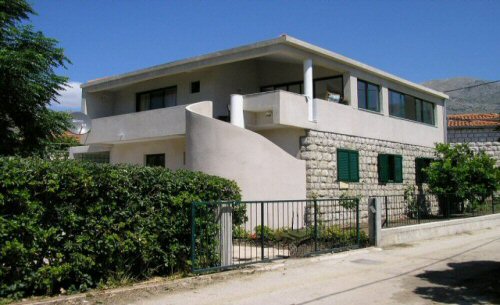
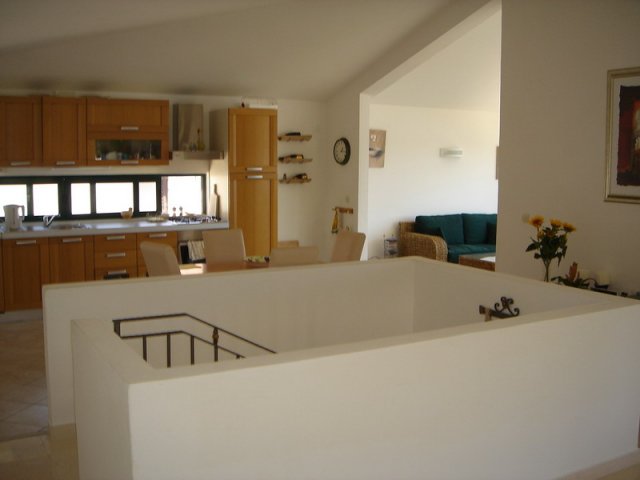
While western real-estate markets are showing signs of recovery from one of the worst crises in history, real-estate prices in Croatia are expected to continue to fall this year, possibly up to five per cent.
According to research by London-based Knight Frank Residential Research, property prices have experienced significant growth in the first quarter worldwide. In many countries, they have returned to pre-crisis levels, research shows.
In Great Britain, for example, real-estate prices in the first quarter jumped by 8.9 per cent while in the USA they grew by 2.3 per cent. Growth over 10 per cent was registered in the Scandinavian countries, Canada, Australia, South Africa, Israel, Singapore and Hong Kong. China saw incredible 68 per cent growth.
Even countries such as France and Germany that have experienced smaller increases contribute to what can be seen as clear signs that those markets – and the economies of those countries – are recovering from recession.
The only EU countries where real-estate prices have dropped are Ireland and Spain, a development explained by greater supply than demand.
Although Croatia was not covered by the research, data show that apartment prices continue to fall as in other transitional countries like Latvia, Lithuania and Bulgaria.
Economist Damir Novotny has said: "There was not such a dramatic drop in prices in Croatia as in the rest of the world, but our markets slower to recover." He has predicted that prices will continue to fall, or, in the best-case scenario, stagnate until Croatia enters the European Union.

Croatia´s real-estate market continues to decline


The deserted bays of Kornati islands

Financial Times
By Claire Wrathall
The 16th-century chapel of Our Lady of Tarca stands on the jagged rocky shore of the scarcely inhabited island of Kornat, 18 nautical miles off Croatia’s north Dalmatian coast. Yet, despite its remoteness, most sailors in the desolately beautiful Kornati archipelago make a point of visiting at the start of the season. Signing the book by the door, and genuflecting before the altar and the ancient wooden statue of St Anthony, is held to protect the visitor from storms and other dangers. After our crew duly inscribed their names, we climbed a nearby hill the better to admire a 33m twin-masted schooner – our home for the next few days – anchored in the bay below. We then set sail for the neighbouring island of Levrnaka, where we would moor that night.
When George Bernard Shaw visited this part of the Adriatic in 1929, the landscape moved him to hyperbole. “On the last day of the Creation, God desired to crown his work and thus created the Kornati islands out of tears, stars and breath,” he wrote, to the subsequent delight of the area’s tourist industry.
Southern Dalmatia, with its tourist honeypot Dubrovnik and modish islands such as Hvar and Korcula, is well established. But the north is less frequented, its landscape harsher and more dramatic, the little Venetian harbours fewer and farther between. By the time you reach Kornati, you’ve all but left civilisation behind. Not much grows on these 140-odd pale karst isles and islets: only fragrant maquis, which fills the air with the scent of wild sage and oregano, and the odd holm oak or olive tree. And none has a permanent population or a village. Well out of reach of a phone signal, these clear ultramarine waters offer respite from the outside world. No surprise, then, that you can only really explore them by boat.
We started our voyage in Zadar, site of Croatia’s largest university. Had it not been for 72 bombing raids during the second world war and further bombardment by Serbian artillery in the early 1990s, it might rival Dubrovnik. Yet what remains of its Italianate old town, a labyrinth of narrow streets and airy piazzas surrounded on three sides by water, is still worth seeing. The handsome stock of buildings are constructed from white limestone that over time has been burnished to a reflective surface, which gleams gold at sunset. Its imposing ninth-century Byzantine rotunda church of St Donatus recalls the basilica on Torcello, an island in the Venice lagoon, and the cathedral bears a striking resemblance to the one in Pisa, while the excellent Donat ice-cream parlour by the cathedral is proof that Croatian sladoled rivals Italian gelato.
There are a handful of museums devoted to ancient glass, archaeological finds, ethnography, gold, and silver, along with Fosa (www.fosa.hr), a good waterside fish restaurant. But Zadar’s most extraordinary attraction is the Sea Organ, a gigantic 35-pipe instrument installed beneath the city’s handsome new marble esplanade, the Donja Riva. Depending on the weather and water conditions, the organ issues random rather eerie harmonic sounds that emerge from holes in the pavement and the steps that go down to the water.
| The 14-berth schooner Fortuna |
Otherwise, though, it was not luxurious. Skippered by its owners Tonci and Mirna Toric, aided by a first mate and a cook, it’s a base for the sort of holiday on which you make your own bed (a bedding roll containing a cotton quilt of the kind you get in business class on airlines, a narrow sheet and a pillow are provided), empty your own bin and bring your own toiletries.
Except at meals, which they serve, the crew are there for the boat, rather than the guests. (There was no faulting the way the sails were furled and unfurled, and I marvelled at the neatness of the rope coils on deck.) In some ways, it felt like staying with friends you barely knew, which made for occasional awkwardness, but this was ultimately outweighed by their vast knowledge of the area, its waters and its restaurants.
This is also the selling point of the charter company Sail Dalmatia, which had organised my trip. Founded by Dora Vulic, a London-based Croat who grew up among the sailing community in Split, it represents 45 vessels, from 10m sailing boats that sleep four (from €810 a week in late September, if you don’t need a skipper) to five-cabin 100ft Azimut motor yachts (€59,675, excluding food and fuel in high season), by way of eight schooners and ketches.
It’s this kind of insider knowledge you need in Croatia, a country still mystifyingly short of alluring hotels, and where dining out can be a lottery. In half a dozen visits I have never eaten as well as I did on this trip, thanks to our hosts’ recommendations and to chef Tomislav’s skill in the galley.
Konoba Levrnaka, where we dined after paying our respects to Our Lady of Tarca, was a simple seaside taverna in Anica bay, close to the only sandy beach in Kornati. We ate what we were offered: first, a tureen of juha, an intensely flavoured clear fish soup full of firm-fleshed skrpina, the bellicose-looking scorpion fish native to these waters, and utterly delicious. Then a kovac, a supersize John Dory baked to perfection in the traditional clay oven they call a peka, with shallots and flavourful potatoes. With a side order of blitva, a spinach-like leaf that’s another staple here, it was a great meal, made more memorable by the fact that, as we were eating, the taverna’s owner speared an octopus with a trident from the quay. We ate it for lunch next day, grilled with lemon and garlic, on the aft deck of our beautiful boat, anchored in yet another calm turquoise bay.
Periode 19 juli tot 26 juli (1 week)
Bavaria 32 (bj.2005) 2 cabines, 4+2 beden, rolgrootzeil Normaal 1.400,- euro NU 1.250 euro !!!
Periode 2 aug tot 9 aug (1 week)
Bavaria 33 (bj.2007) 2 cabines, 4+2 beden, rolgrootzeil Normaal 1.750,- euro NU 1.499 euro !!!
Periode 9 aug tot 16 aug (1 week)
Bavaria 30 (bj.2006) 2 cabines, 4+2 beden, rolgrootzeil Normaal 1.490,- euro NU 1.299 euro !!!
Periode 9 aug tot 16 aug (1 week)
Bavaria 33 (bj.2007) 2 cabines, 4+2 beden, rolgrootzeil Normaal 1.750,- euro NU 1.499 euro !!!
Periode 9 aug tot 16 aug (1 week)
Vektor 36 (bj.2007) 3 cabines, 6+2 beden, grootzeil Normaal 2.350,- euro NU 2.090 euro !!!
Bovengenoemde prijzen zijn inclusief: zeiljacht met standaard voorzieningen zoals een inventarislijst, bedlinnen, keukendoeken, water, 2 gasflessen, eindschoonmaak,
dinghy, bimini/buiskap, GPS, elektrische ankerlier. Optioneel: buitenboordmotor: 80 euro per week. Excl.Transitlog : 60 euro. (boordpapieren, verzekering etc)
Vraag naar uw mogelijkheden betreffende flottieljeplaatsen voor bovengenoemde zeiljachten!!
De allerlaatste flottielje-plaatsen voor 2008 :
Start 14 juni - 21 juni -28 juni (enkele plaatsen)
Start 5 juli (1 plaats)
Start 2 augustus (1 plaats)
De allerlaatste plaatsen meezeilvakantie voor 2008 :
12 juli tot 19 juli : 6 plaatsen (Bavaria 37, bj.2006)
2 augustus tot 9 augustus : 4 plaatsen (Bavaria 37, bj.2006)
2 augustus tot 16 augustus : 2 plaatsen (Bavaria 39, bj.2006)
Prijsoverzicht:
Deelname 1 persoon : 425 euro pp
Deelname 2 personen : 399 euro pp
Deelname 4 personen : 375 euro pp
Deelname 6 personen : 350 euro pp
Mid-2011 target date for Croatia's EU accession treaty
Croatia's accession negotiations with the European Union, a seemingly never-ending story, could finish in some eight months' time.
Under this scenario, the accession treaty would probably be signed at the end of the Hungarian EU Presidency, in mid-2011. Although the EU refrains from setting the date of accession for any new member, diplomatic sources from different EU countries confirmed to this website that the end of February/beginning of March next year was "the unofficial target date" to conclude the technical part of Croatia's accession talks. If this deadline is met, the accession treaty could be signed in June.
The European Commission declared last year that, provided Croatia meets the necessary criteria and benchmarks, accession talks could be concluded before the end of 2010. But this no longer looks realistic. Croatia has yet to open three more chapters, including the most challenging one (chapter 23) on the judiciary and fundamental rights. EU sources said that this part of the negotiations, known as "the chapter of chapters," can be opened at the end of this month. This would give Croatia until the beginning of next year to focus on meeting the "closing benchmarks," or requirements for successful conclusion of a negotiating chapter.
The Netherlands has blocked the opening of Chapter 23, arguing that Croatia did not fully comply with the requests by Serge Brammertz, Chief prosecutor of the International Criminal Tribunal for the Former Yugoslavia (ICTY). According to EU diplomats, the Netherlands has lifted its objections on the opening of the chapter, following the acceptance of its request to make full co-operation of Croatia with the ICTY a closing benchmark instead.
Croatia will most probably open two more chapters before the summer - on defense and foreign policy (previously blocked by Slovenia), and on competition.
But accession talks can still be affected by circumstances beyond Croatia's influence. One of them is Germany's push for changes to the EU's Lisbon Treaty to allow tougher sanctions against member states not respecting joint fiscal rules. If agreed, such modifications could be introduced and submitted for ratification together with Croatia's accession treaty. Croatia hopes this will not result in a further delay in joining the EU.
Croatia applied for EU membership in spring 2003 and opened accession talks in October 2005. Even pessimists at the time did not predict that negotiations would last as long as they did. The European Commission insists Croatia has to be 100 percent prepared before it can become a member. They want to use the country as a good example for the other candidates from the Western Balkans.
Diplomats from different EU member states, even those who strongly support Croatia's membership, admit that the "lessons learned" by the EU in admitting the insufficiently prepared Bulgaria and Romania are a reason for the strictness in measuring Croatia's progress. This is why many predict any future enlargement process will be more difficult that the previous ones.
Seafront villa near Dubrovnik: boat mooring in front